
Your Florida Outdoor Kitchen Dreams (Without the Headaches)
Contents
- Your Florida Outdoor Kitchen Dreams (Without the Headaches)
- Why Florida Outdoor Kitchens Are Different (And Why That Matters)
- The Permit Nightmare (And How to Navigate It)
- Materials That’ll Actually Survive Florida
- Layout Mistakes I See Constantly
- The Real Cost (Because Nobody Talks About This Honestly)
- Hurricane Season Isn’t a Joke
Florida outdoor kitchens are having a serious moment right now, and I get why you’re here reading this.
You’re probably wondering if the investment is worth it, how to survive Florida’s building codes without losing your mind, and whether your dream setup will actually survive hurricane season.
I’ve spent the last decade watching homeowners transform their backyards into stunning entertainment spaces—and I’ve also seen the disasters that happen when people cut corners.
Let me walk you through everything you need to know.

Why Florida Outdoor Kitchens Are Different (And Why That Matters)
Building an outdoor kitchen in Minnesota is nothing like building one in Florida.
Our climate is brutal.
We’ve got scorching UV rays that’ll fade your countertops faster than you can say “sunscreen,” humidity levels that make rust appear overnight, and hurricanes that test every decision you made during construction.
Here’s what makes Florida unique:
- Salt air corrosion (especially if you’re coastal)
- Year-round sun exposure that destroys cheap materials
- Building codes stricter than your HOA president
- Hurricane preparedness isn’t optional—it’s survival
- Permits for literally everything
But here’s the good news: when you do it right, your outdoor kitchen becomes the most-used space in your entire home.
No joke—my neighbor uses his outdoor setup more than his indoor kitchen from October through May.

Let’s rip off the Band-Aid: you absolutely need permits.
I don’t care what your brother-in-law says about his “guy who can do it cheaper without permits.”
Florida building codes exist because we live in a state where 150-mph winds can turn your stainless steel grill into a flying projectile.
You’ll need permits for:
- Electrical work (lighting, outlets, appliances)
- Plumbing (sinks, ice makers, dishwashers)
- Gas lines (for grills and burners)
- Structural elements (depending on size and permanence)
Every county has slightly different requirements, so call your local building department before you buy a single appliance.
Ask specifically about setback requirements—how far your kitchen needs to be from property lines, power lines, and water features.
And if you’re in an HOA (condolences), get their approval in writing before you start.
Trust me, tearing down a $30,000 kitchen because you skipped this step is not how you want to spend your summer.

Materials That’ll Actually Survive Florida
I’ve seen gorgeous outdoor kitchens turn into expensive disasters within two years because someone chose the wrong materials.
Florida doesn’t forgive cheap decisions.
For countertops, stick with:
- Granite (the MVP of Florida outdoor kitchens)
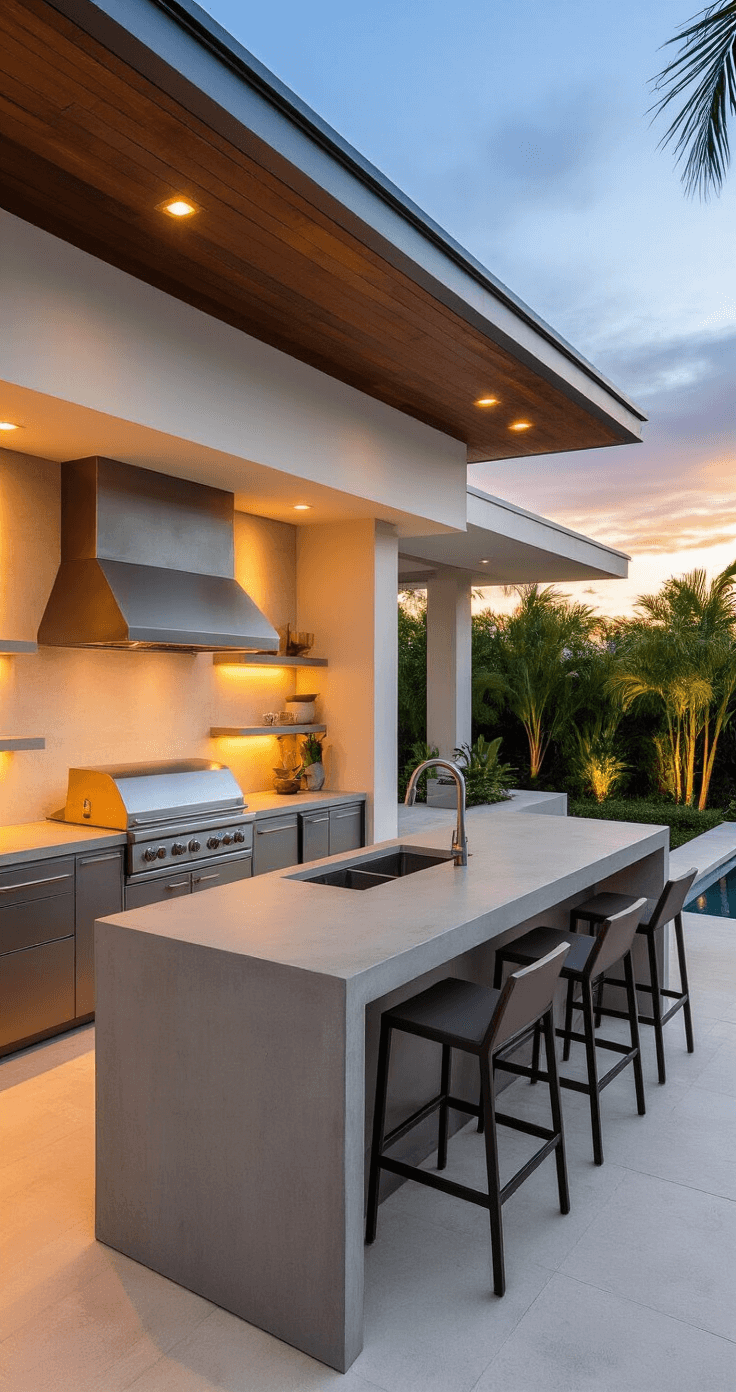
- Concrete (sealed properly, it’s indestructible)
- Tile (budget-friendly and weather-resistant)
Skip marble, wood, or laminate unless you enjoy throwing money away.
For cabinetry and structures:
Aluminum frames are your best friend—they don’t rust, warp, or rot.
Marine-grade stainless steel works if you’re near the coast.
HardieBacker cement board provides excellent backing that won’t disintegrate when moisture inevitably gets in.
For appliances:
Buy American-made, premium-grade equipment designed for outdoor use.
That $200 outdoor refrigerator from the big-box store?
It’ll die before your next birthday.
Invest in brands that specifically engineer for extreme weather and temperature fluctuations.

Layout Mistakes I See Constantly
Your outdoor kitchen isn’t just your indoor kitchen moved outside.
The workflow is different, the safety considerations are different, and the experience is completely different.
Avoid these common mistakes:
Positioning the grill wrong: Never place your cooking area where prevailing winds blow smoke directly into your house or seating area.
Ignoring shade: Cooking in direct Florida sun at 2 PM in July is miserable—design with natural shade or add a pergola.
Skimping on counter space: You need MORE prep space outdoors than indoors because you’re dealing with larger cuts of meat, serving platters, and drinks.
Forgetting about ventilation: If your kitchen is under a covered patio, you absolutely need a vent hood or your ceiling will turn black with soot.
Terrible traffic flow: Separate your cooking zone from your seating area so guests aren’t constantly in your way.
The best layouts I’ve seen create distinct zones: prep, cooking, serving, and entertaining.
The Real Cost (Because Nobody Talks About This Honestly)
Budget conversations make everyone uncomfortable, but let’s be real.
Entry-level functional setup: $8,000-$15,000
Basic grill island, mini-fridge, some counter space
Mid-range entertainment space: $20,000-$40,000
Quality appliances, custom stonework, proper lighting, sink
Luxury outdoor paradise: $50,000-$100,000+
Multiple cooking surfaces, pizza ovens, full bars, custom everything
Most Florida homeowners land somewhere in the mid-range category.
That might sound like a lot, but consider this: you’re adding usable square footage to your home that you’ll actually use year-round.
Try getting that kind of value from an indoor renovation in Florida’s real estate market.
Hurricane Season Isn’t a Joke
Every summer and fall, you need a hurricane game plan for your outdoor kitchen
This post may contain affiliate links. Please see my disclosure policy for details.