Why Most Boys’ Bedrooms Fail (And How to Avoid That Disaster)
Contents
- Why Most Boys’ Bedrooms Fail (And How to Avoid That Disaster)
- The Neutral Foundation Approach (Boring Name, Brilliant Strategy)
- When Themes Actually Work (And When They Absolutely Don’t)
- Color and Pattern Without Creating Visual Chaos
- Furniture Placement That Actually Makes Sense
- Storage Solutions That Don’t Require a PhD to Maintain
The biggest mistake I see parents make? Going all-in on whatever their kid is obsessed with right now.
I once painted an entire room with dinosaurs. Custom murals, dinosaur-shaped everything, bedding covered in T-Rexes. Six months later, my son was “totally over dinosaurs” and into space exploration. That expensive makeover lasted exactly half a year.
The secret is creating a foundation that doesn’t require demolition when interests shift.
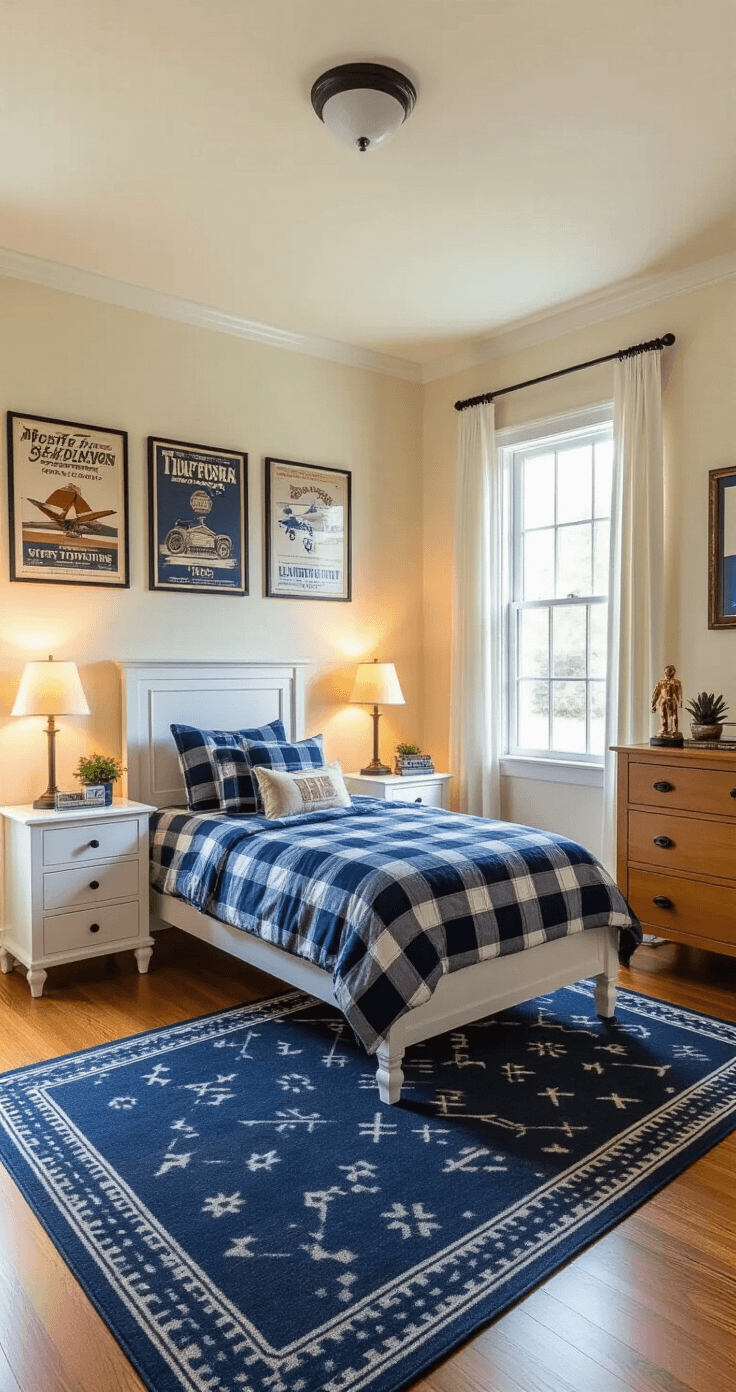
The Neutral Foundation Approach (Boring Name, Brilliant Strategy)
Start with walls that won’t make you cry later.
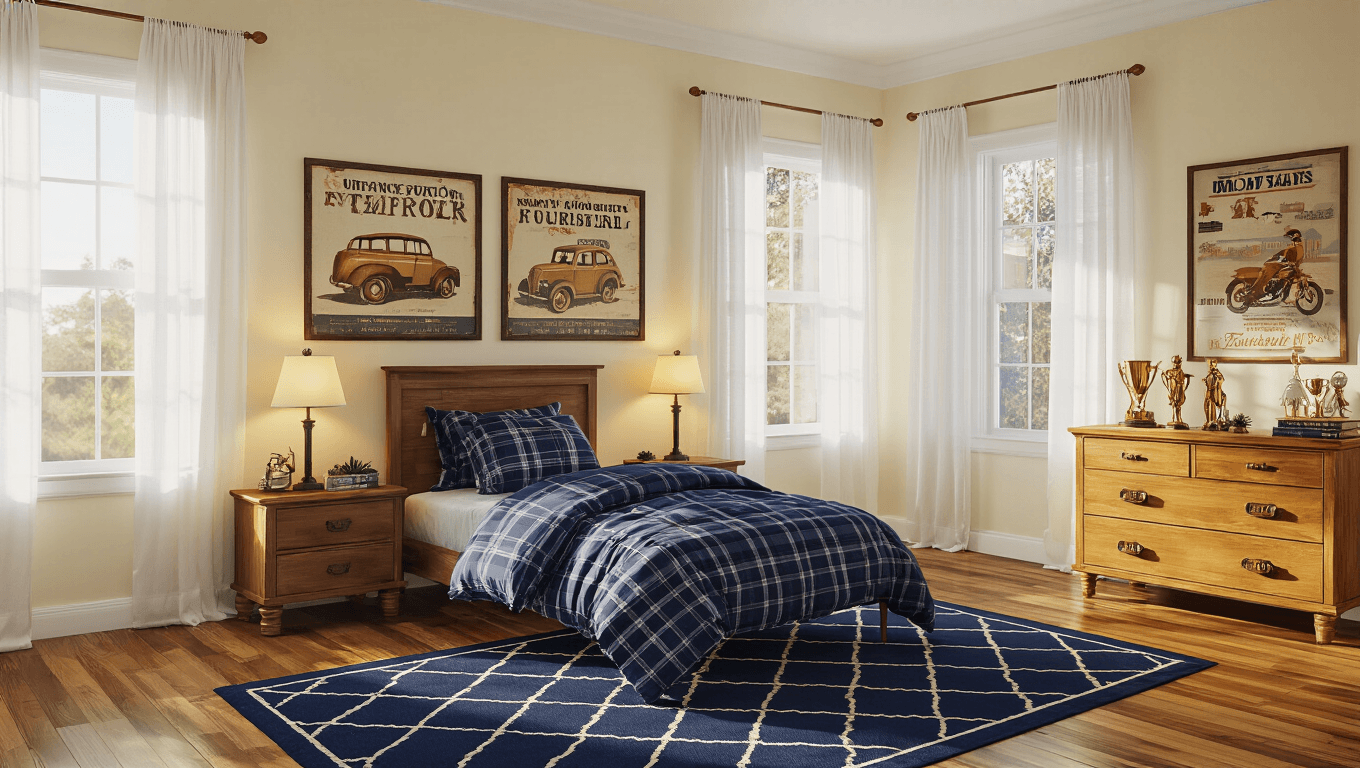
I’m talking cream, beige, soft gray, or even a muted sage green. These colors mature beautifully as your child grows from Lego-obsessed seven-year-old to moody teenager.
But here’s where it gets interesting—neutral walls aren’t permission to create a boring box.
Add personality through easily swappable elements:
- Framed posters that can rotate with interests (much cheaper than repainting)
- Patterned bedding sets that bring color without commitment
- Throw pillows in bold colors or patterns
- Area rugs that define the space and add warmth
Think of the room like a stage. The walls are your backdrop—keep them simple. Everything else is set dressing that you can change between acts.
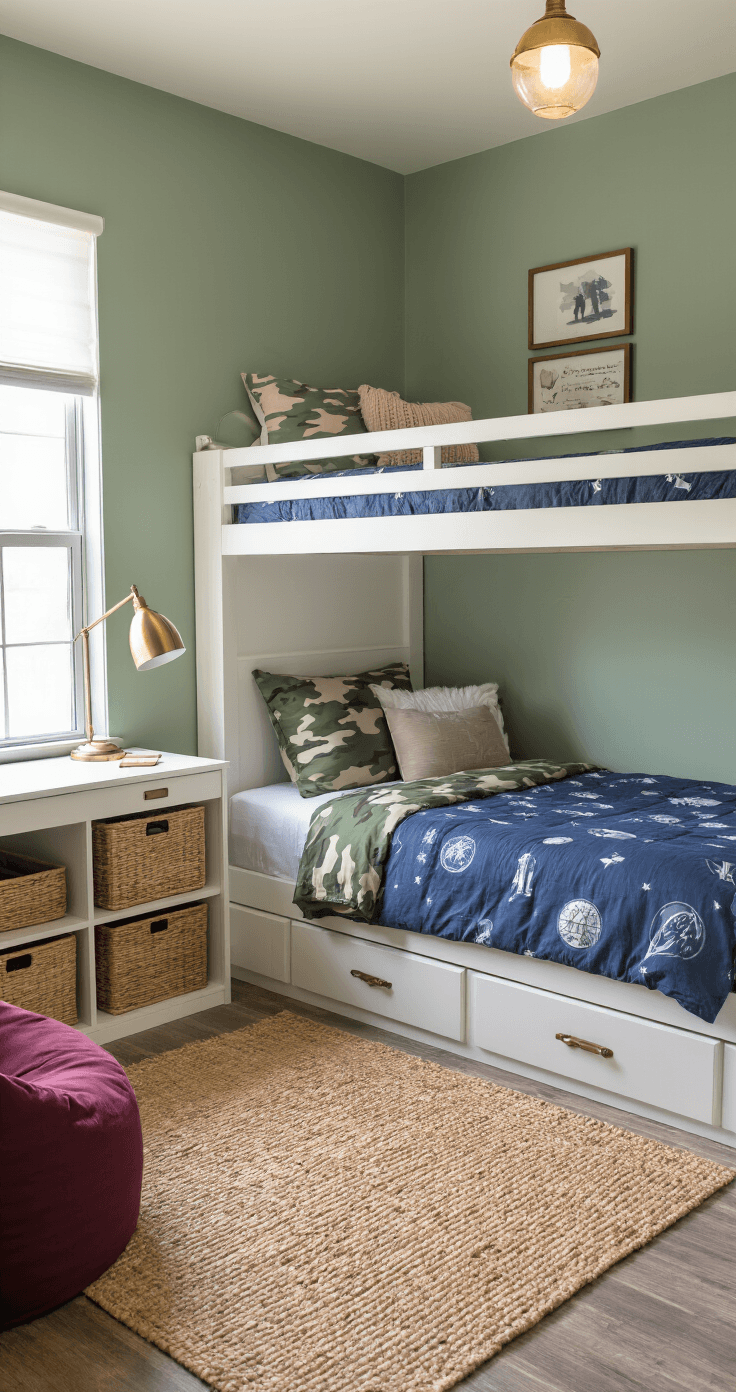
When Themes Actually Work (And When They Absolutely Don’t)
I’m not completely against themed rooms. I’m against themed rooms that require a second mortgage and a therapist when your kid moves on.
If you’re going thematic, follow this rule: commit lightly.
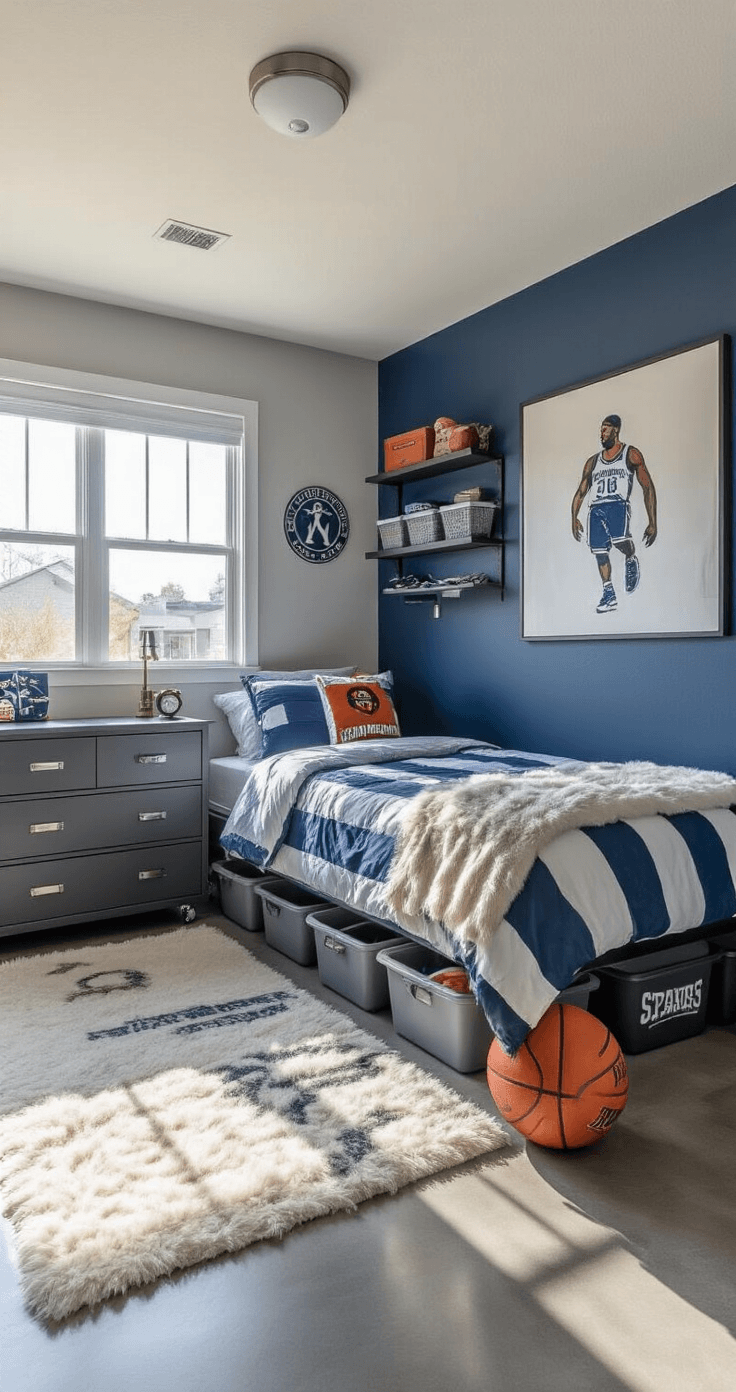
Say your son loves basketball. Don’t paint basketballs on every surface. Don’t install basketball-shaped light fixtures. Don’t make the bed look like a court.
Instead:
- Paint one accent wall in his team’s color
- Add a few framed jerseys or sports posters
- Get sports-themed bedding that costs less than $100
- Include a basketball hoop hamper (functional AND thematic—my favorite combination)
When he discovers skateboarding next year, you swap out the bedding and posters. Done. No painting required.
Popular themes that tend to have staying power:
- Space and astronomy (broader than specific shows)
- Transportation (cars, planes, trains)
- Sports (even if the specific team changes)
- Adventure and exploration
- Music and instruments
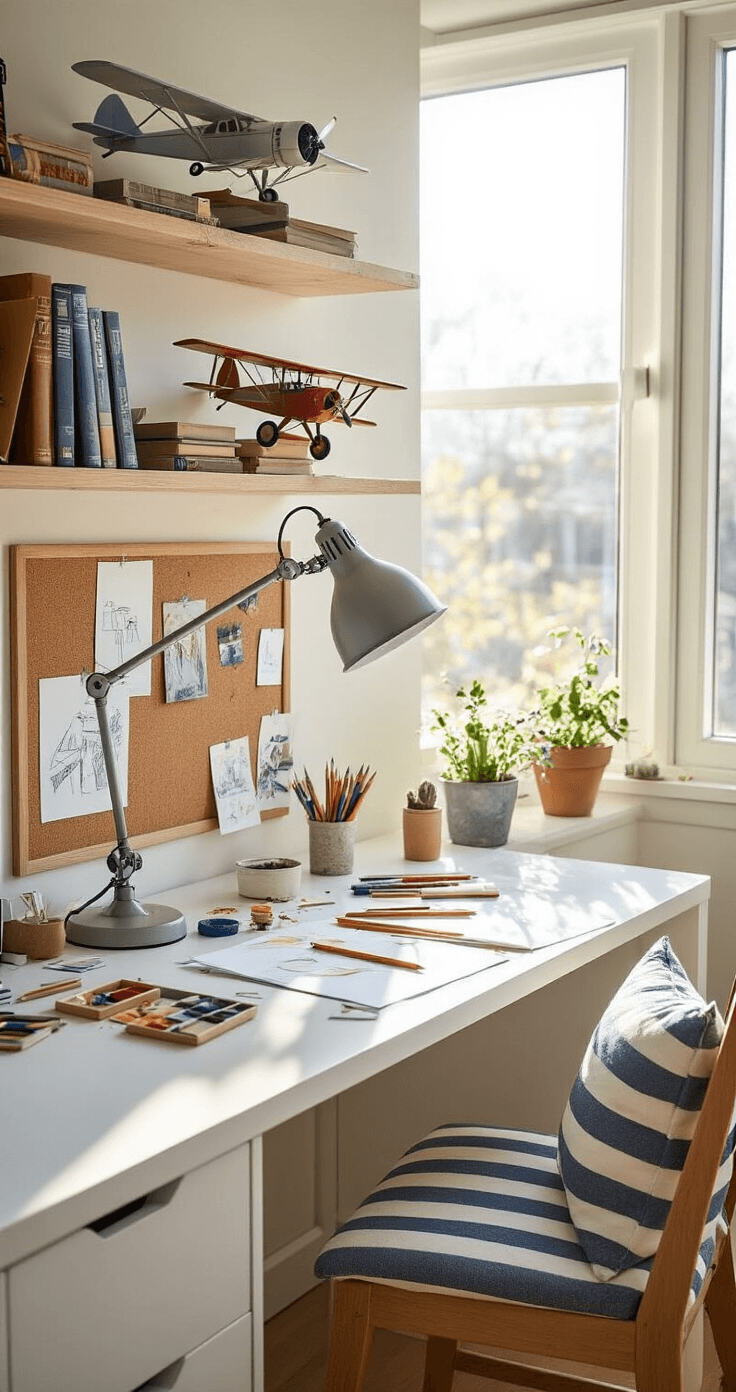
Color and Pattern Without Creating Visual Chaos
I used to think more was more. Throw all the colors at the wall and hope something sticks.
The result looked like a toy store exploded.
Here’s what actually works:
Pick one or two bold statement pieces—maybe a large framed map above the bed or oversized wall art featuring something meaningful to your son.
These become conversation starters and focal points that don’t overwhelm the space.
Pattern mixing is an art, not a free-for-all:
Stick with patterns in the same color family but different scales. A large-scale plaid on the bed, medium stripes on pillows, small gingham on a chair. This creates visual interest without inducing headaches.
Color pops work best in unexpected places:
- Paint the inside of a bookshelf in a bold color
- Add colored trim around windows or doors
- Use accent colors in blues, greens, or even oranges that reflect interests without screaming them
I painted my son’s closet interior a deep navy blue. Every time he opens it, there’s this little surprise of color, but it doesn’t dominate the room.
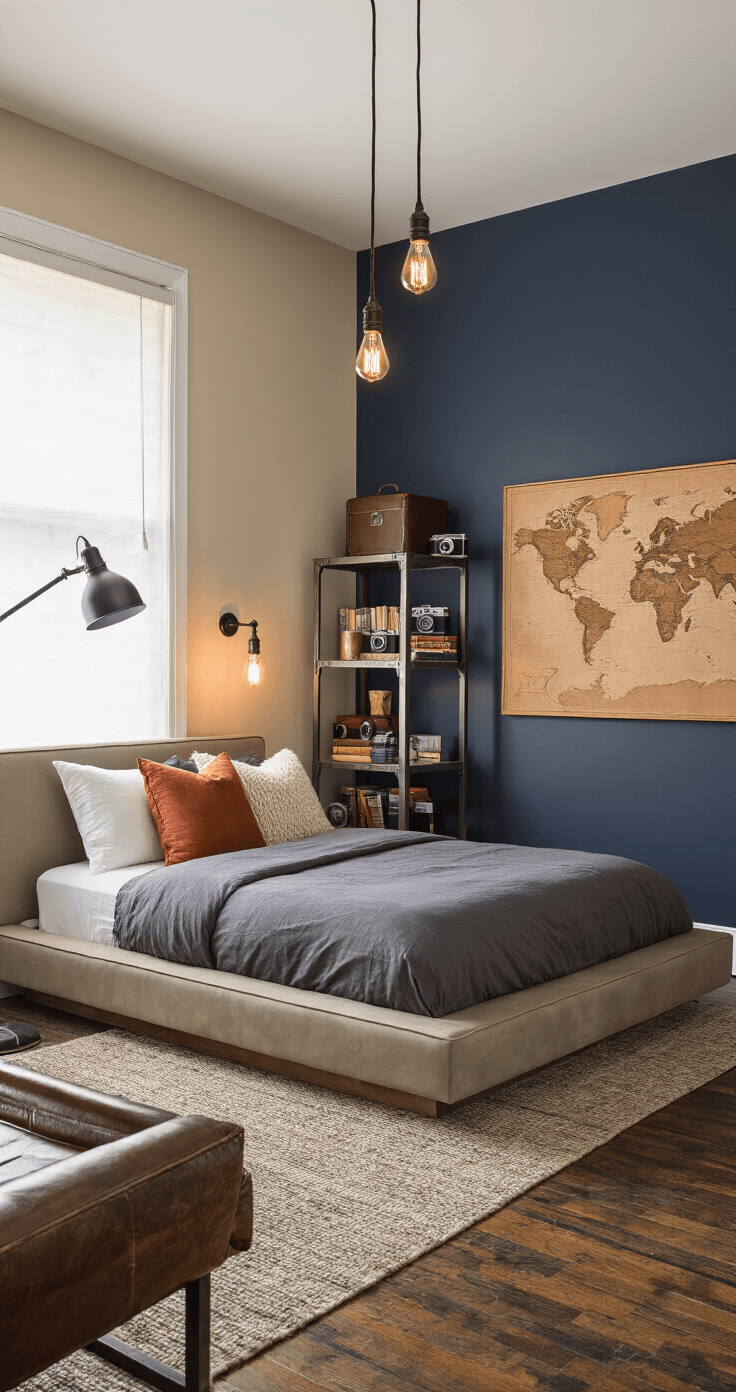
Furniture Placement That Actually Makes Sense
Most people shove the bed against whatever wall seems convenient. Then they wonder why the room feels cramped and awkward.
For single beds in smaller rooms:
Position the bed centrally against the longest wall. This creates symmetry and makes the bed the natural focal point. Add matching nightstands on either side if space allows.
For bunk beds or shared rooms:
Corner placement is your best friend. This maximizes floor space for playing, which matters more than you think.
I learned this after years of my kids complaining they had “nowhere to build” their Lego creations. Moving the bunks to the corner freed up an entire quadrant of the room. Suddenly they had space for activities beyond just sleeping.
The bed-as-throne approach for older kids:
Center the bed on the wall like a hotel room. Add flanking furniture—nightstand on one side, small bookshelf on the other. This setup feels more mature and less “little kid.”
Storage Solutions That Don’t Require a PhD to Maintain
Storage is where most boys’ bedrooms go to die.
You install these elaborate organization systems, and within a week, clothes are everywhere, toys overflow, and you question all your life choices.
Keep it stupid simple:
- Multi-drawer dressers are non-negotiable (one for every kid in the room)
- Nightstands with drawers hide the random junk that accumulates
- Open bookcases for displaying favorites (but not so many shelves that organizing becomes overwhelming)
- Large baskets or bins labeled by category—sports equipment, art supplies, random treasures
I use three-bin systems: Keep, Donate, Trash. Every few months, we do a clean-out. It’s quick, visual, and even my younger son can handle it without excessive complaining.
The game-changer nobody talks
This post may contain affiliate links. Please see my disclosure policy for details.