Why Your Kitchen Floor Matters More Than You Think
Contents
Your floor takes a beating. Every. Single. Day.
I once installed beautiful but unsealed oak in a rental kitchen (rookie move) and watched in horror as a single dropped coffee cup left a stain that haunted me for two years. That experience taught me something crucial: the prettiest floor means nothing if it can’t handle your actual life.
The big stuff your floor needs to survive:
- Water splashes from the sink (and that time you forgot the faucet was running)
- Dropped pots, pans, and the occasional ceramic mug
- Foot traffic from humans, plus paws if you’ve got pets
- Grease splatters that somehow travel six feet from the stove
- Temperature swings if your kitchen gets direct sun or sits near exterior doors
Choose wrong, and you’ll spend more time maintaining your floor than using your kitchen. Choose right, and you’ll forget it’s even there—in the best possible way.
The Kitchen Flooring Hall of Fame: What Actually Works
Ceramic and Porcelain Tile: The Reliable Workhorse
I’m starting here because ceramic tile is the friend who always shows up and never complains.
Why I love it:
- Water laughs and walks away (seriously, waterproof is an understatement)
- Scratch-resistant enough that my friend’s three large dogs haven’t destroyed it in five years
- Comes in every style from farmhouse to ultra-modern
- Affordable enough to splurge on good installation
The honest downside:
- Cold underfoot (winter mornings are rough)
- Hard surface means dropped plates rarely survive
- Grout lines need occasional cleaning and sealing
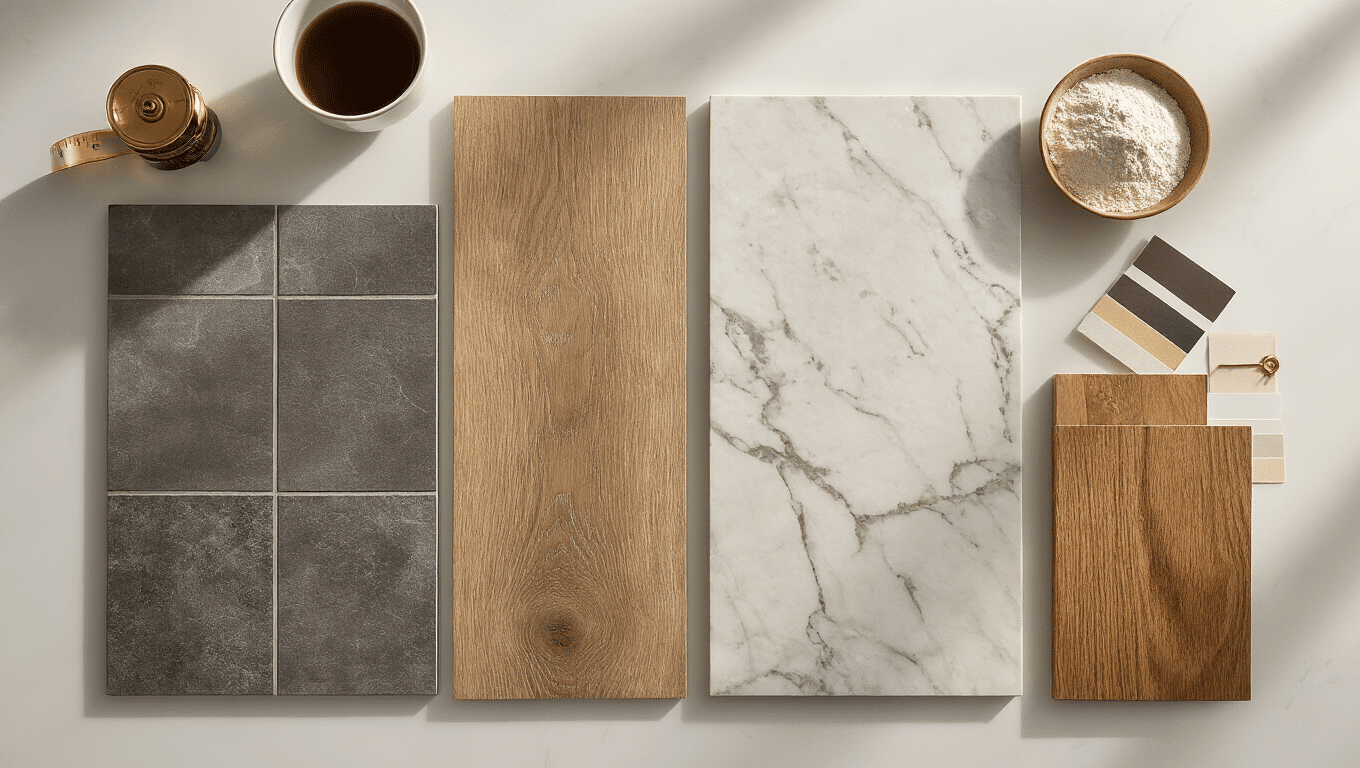
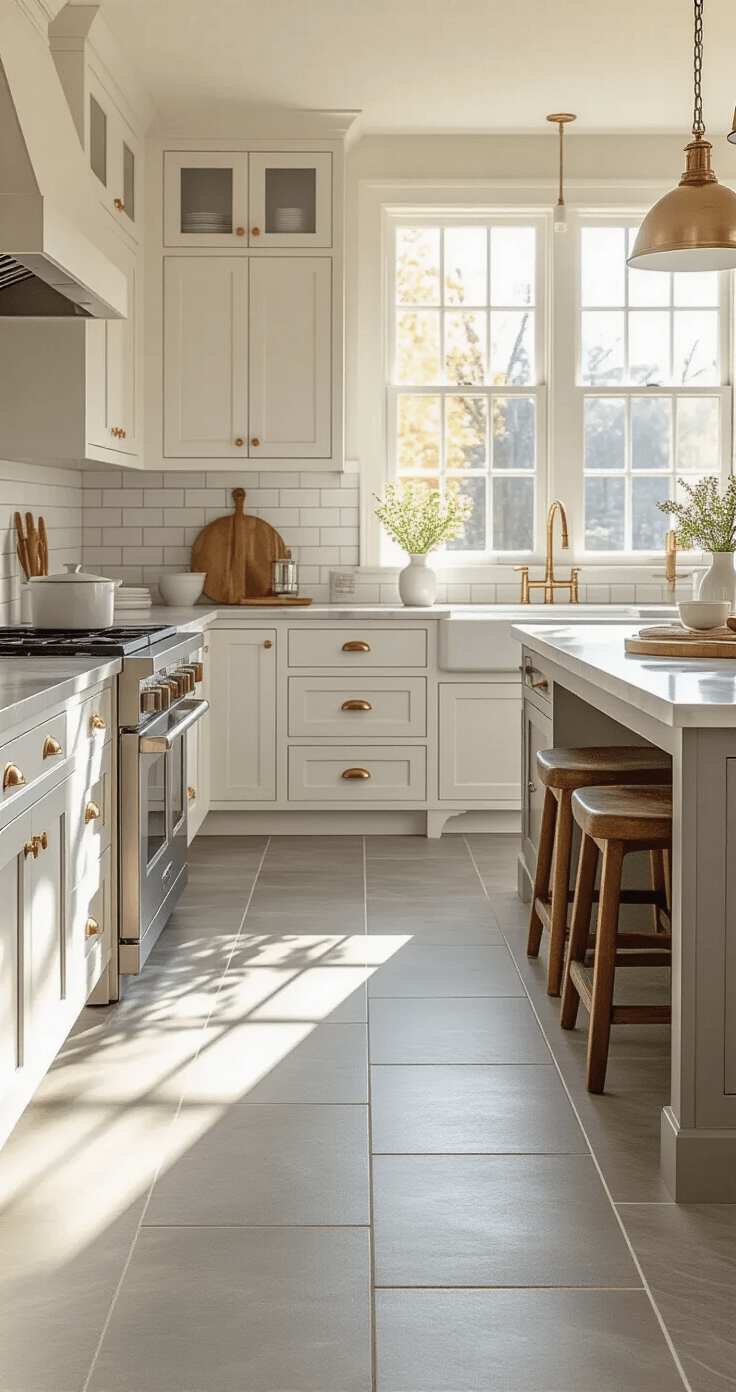
I installed porcelain tile in my own kitchen three years ago—large-format matte grey rectangles in a running bond pattern. The grout stays surprisingly clean because I sealed it properly (do NOT skip this step), and the whole floor still looks brand new despite my complete lack of “gentle living.”
Pro move: Wood-look porcelain tile gives you the warm aesthetic of hardwood with zero water anxiety. It’s having your cake and eating it too, except it’s flooring and you can spill actual cake batter on it without panic.
Best for: Anyone who cooks frequently, has kids or pets, or just wants a floor they can ignore.
Luxury Vinyl Plank (LVP): The Overachiever
LVP is what happens when flooring technology actually solves problems instead of creating them.
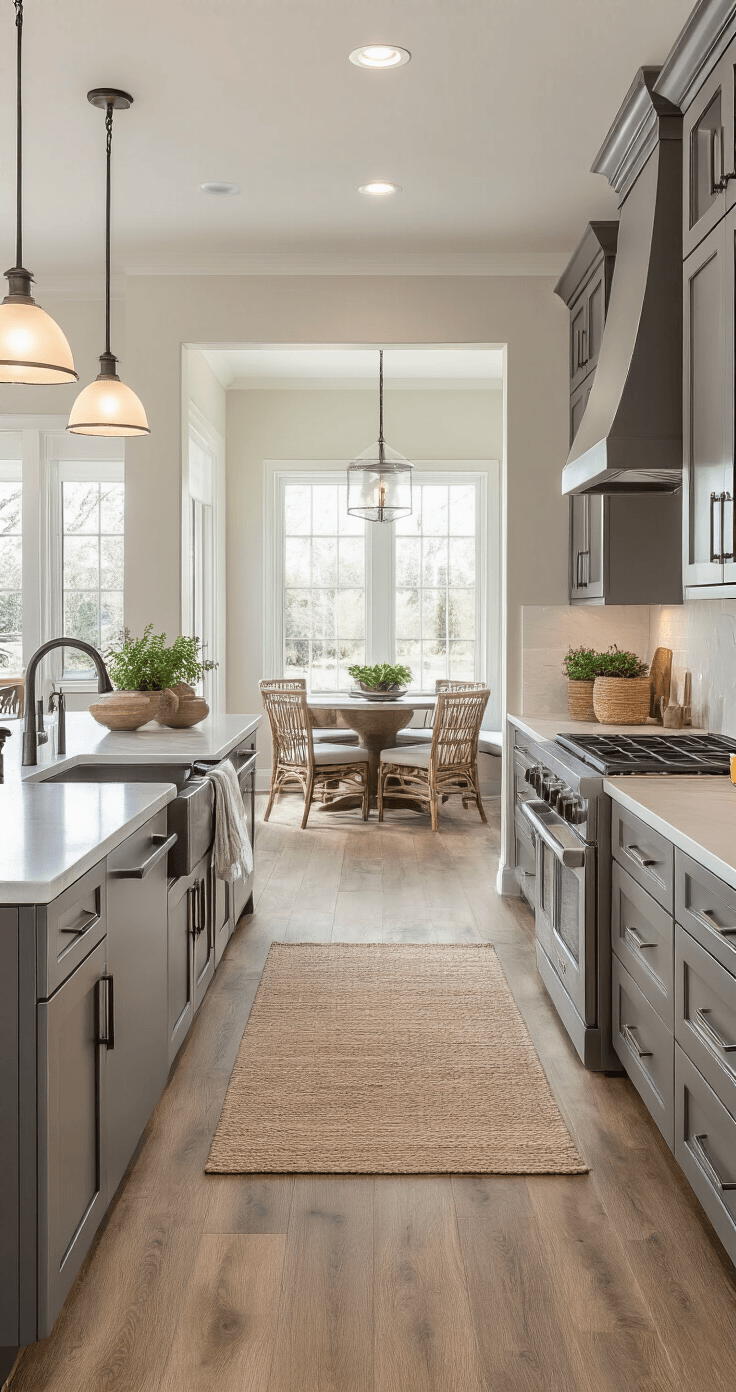
My sister installed luxury vinyl plank flooring in her kitchen last year, and I’ll admit I was skeptical. Vinyl sounded cheap, you know? But this stuff is completely waterproof, insanely durable, and looks so much like real wood that I literally bent down to check.
Why it’s everywhere right now:
- 100% waterproof (the core won’t swell even if you flood it)
- Softer and warmer underfoot than tile
- Click-lock installation means actual DIY-friendly
- Costs way less than hardwood
- Mimics wood, stone, even concrete
The reality check:
- Can fade in direct, intense sunlight over years
- Heavy furniture can dent it if you’re not using pads
- Cheaper versions look cheap—you get what you pay for
Budget around $3–$6 per square foot for quality LVP. Anything under $2 will look plasticky and perform accordingly.
I helped install my sister’s floor over a weekend. No special tools beyond a vinyl plank cutter, a measuring tape, and patience. If you can follow instructions and cut straight-ish lines, you can do this.
Best for: DIYers, budget-conscious renovators, anyone who wants wood looks without wood stress.
Natural Stone: When You Want to Feel Fancy
Slate, limestone, marble, travertine—natural stone brings a weight and presence that manufactured materials just can’t touch.
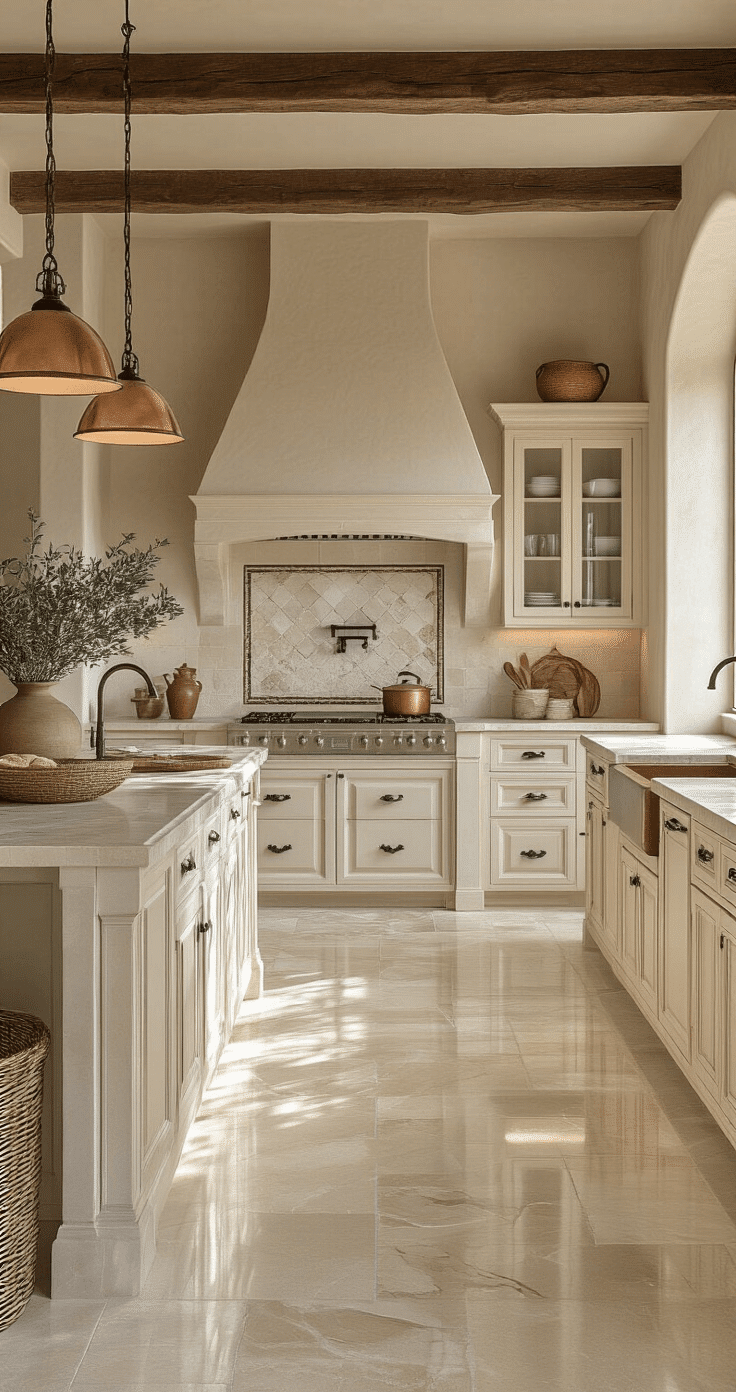
I worked on a kitchen remodel where we laid honed marble throughout. The homeowner was terrified about staining (marble’s reputation precedes it), but we sealed it properly and she’s been living her best life for four years with only minor patina development.
The appeal:
- Genuinely luxurious aesthetic
- Every floor is completely unique
- Extremely durable if sealed and maintained
- Cool temperature (amazing in hot climates)
- Ages beautifully rather than just aging
The commitment:
- Expensive ($8–$20+ per square foot)
- Requires professional installation
- Needs regular sealing
- Some stones (especially marble) stain easily
- Heavy and cold
Stone isn’t forgiving. You’re signing up for maintenance and embracing imperfection. But if you want a kitchen that feels like it belongs in a renovated Italian farmhouse, nothing else delivers.
Best for: Committed renovators, people who view their home as a long-term investment, warm-climate dwellers.
Hardwood and Engineered Wood: The Classic with Conditions
Real hardwood in kitchens is controversial, and I understand both sides.
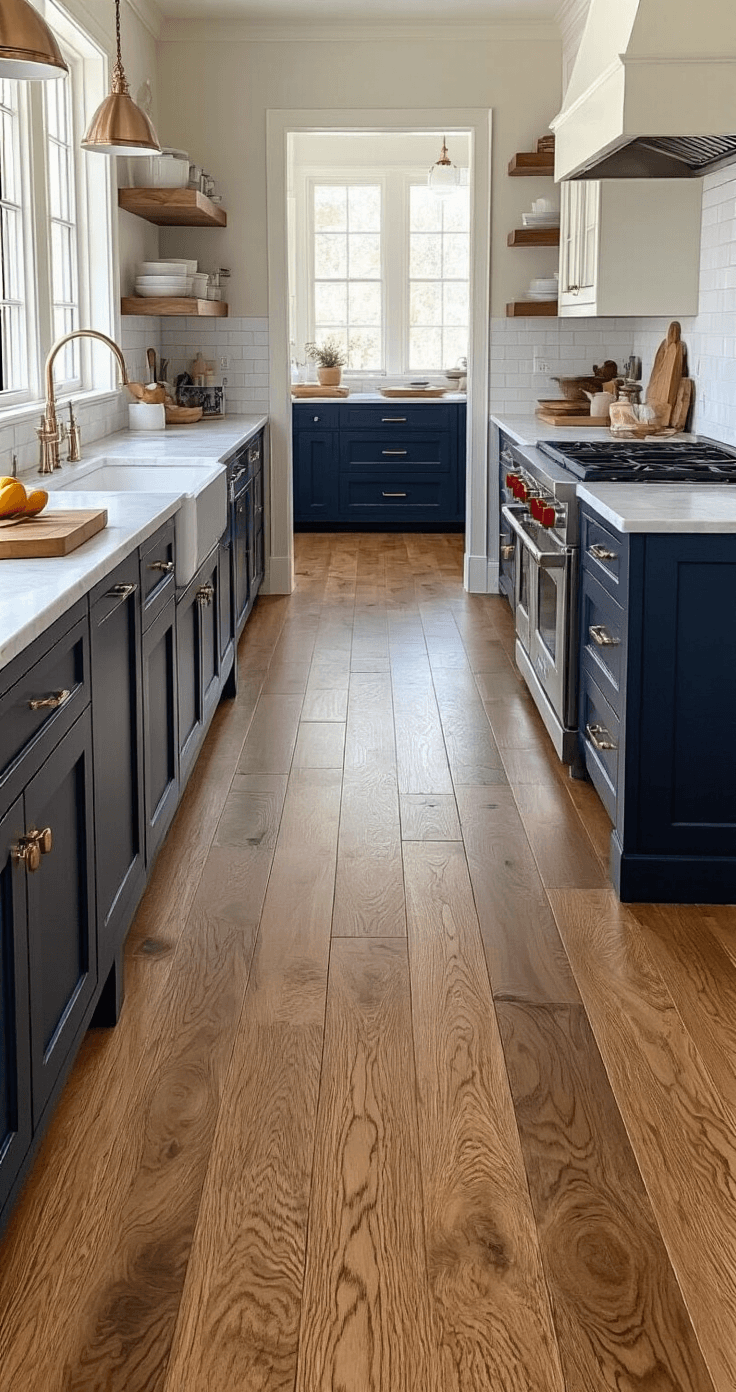
Sealed hardwood or engineered wood can work beautifully in kitchens IF you’re realistic about care. I’ve seen oak floors in 100-year-old homes that have survived generations of cooking, and I’ve seen pine floors destroyed in three years by modern life.
When wood works:
- You’re diligent about wiping spills immediately
- The wood is properly sealed (and resealed every few years)
- You’re okay with patina and character marks
- You love warm, timeless aesthetics
- You’re using engineered wood (more stable than solid)
When wood fails:
- Standing water anywhere near the sink
- Homes with humidity swings
- High-traffic family kitchens with less-than-careful kids
-
This post may contain affiliate links. Please see my disclosure policy for details.